


Adaptiv TPX 2.0 Review
Updated: 07-11-2025
Adaptiv’s TPX 2.0 radar detector was tested during our Radar Detector and Laser Jammer Shootout and thanks to a complete electronics overhaul the TPX 2.0 is now ranked as a 3-star rated radar detector, providing you ample time to slow down in most police radar encounters.
 What makes the Adaptiv TPX unique is that it is the only radar detector designed with the motorcycle rider in mind.
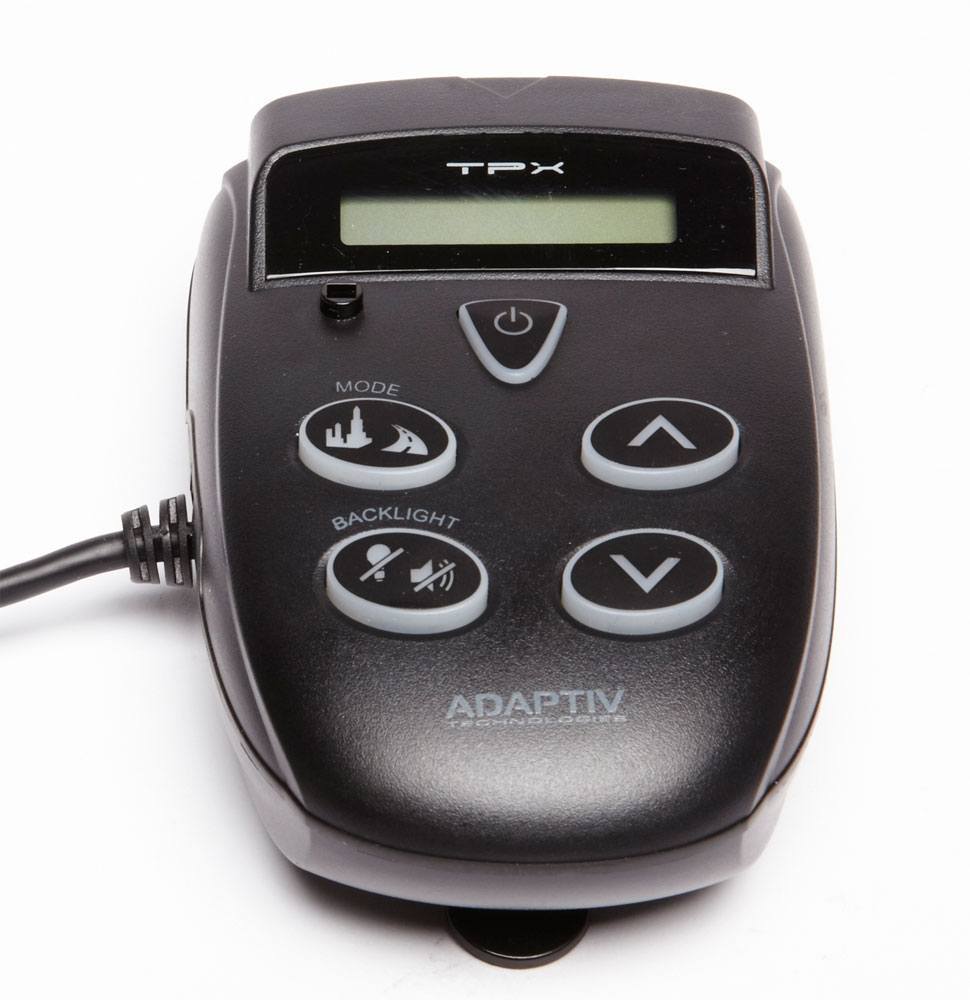
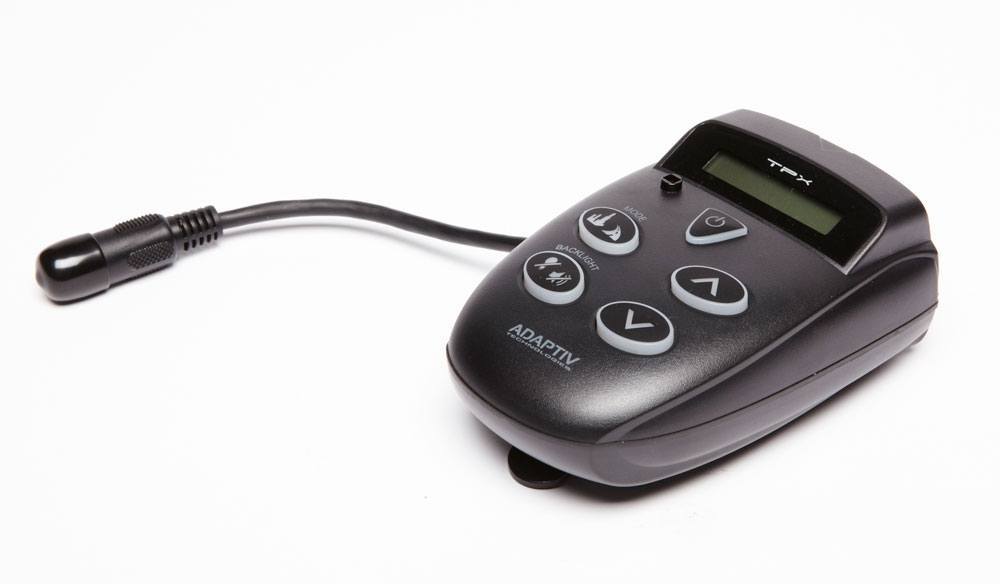
Because of this the Adaptiv TPX is waterproof, shock proof, has a LCD display angled upwards toward the rider, comes equipped with an external LED display and has large buttons enabling you to program your detector while riding, even with gloves on.
The Adaptiv TPX motorcycle radar detector is easy to install. Just mount on top of your motorcycle radar detector mount, connect the direct wiring harness to your battery, zip tie the wiring harness to your handlebars and plug your detector in.
When parking your bike just unplug your detector from the harness and remove it for security reasons.
The Adaptiv TPX system also has additional external alert accessories, such as their wireless helmet alert system and their external Bluetooth transmitter.
For riders wanting a GPS-enabled detector, the Adaptiv TPX Pro is the natural choice.
Radar Detection Range
The Adaptiv TPX is categorized as a 3 star radar detector, with 4 times the range of a police K and Ka radar gun.
Sensitivity and Filtering
The filtering characteristics of the TPX is rated as good and is comparable to other radar detectors in the three star category such as the Escort 8500x50
Easy to See Display and External Visual LED Alert
Because the LCD display of the TPX detector is on top of the detector and angled upwards toward the rider, its easy to see while riding.
However what makes the TPX stand out is its external LED display, which you can mount to your windshield and their wireless alert accessories that you can purchase separately.
Warranty & Support
The TPX system comes with Adaptiv’s 1-year warranty and Radar Roy's 30-day no risk money back guarantee.
The TPX radar detector includes the detector, external LED visual alert, heavy duty wiring harness, and a quick release mounting plate that will attach to our motorcycle radar detector mounting systems.
Included Accessories
The TPX radar detector includes the detector, external LED visual alert, heavy duty wiring harness, and a quick release mounting plate that will attach to the Techmount radar detector motorcycle mounting system.
Why Buy from Radar Roy?

Authorized Adaptive: RadarBusters has been an authorized dealer for Adaptive since 2005, so you can be assured that you detector is covered under Adaptive's warranty program.
Real Reviews: Unlike the other radar detector review websites out there, Radar Roy is a retired cop and certified traffic radar instructor with over 40 years of experience and has his own arsenal of police radar and laser guns. Luxury Automotive was so impressed with Roy’s high standards and qualifications that they dubbed him the “General Schwarzkopf of radar detectors”.
No Sales Tax: You will not be charged sales tax as long as your order is shipped outside of Arizona.
Trade Up – Not In: Considering trading your old radar detector for a new one? DON”T until you watch this video!
Radar Roy Support: Have a problem or concern with your detector? Then email Radar Roy 24/7 and he will PERSONALLY get back with you typically within 12 hours or less!
Q: What are the different radar detector bands?
A:
- X-Band 10.525 GHz +/- 25 MHz
- An older band, mostly used by automatic doors in supermarkets and rarely used by law enforcement anymore. You can eliminate this band by turning off X band in the menu.
- K-Band 24.150 GHz +/- 100 MHz
- A potential radar strike that could also be a non-radar law enforcement. Know the area as many police still utilize this band.
- Ka-Band 34.700 GHz +/- 1300 MHz
- Alert! It’s the police. One of the most common used bands by law enforcement today.
- Laser 904nm, 33 MHz bandwidth
- Alert! It’s the police. Higher law enforcement such as state troopers often use laser.
Q: Are radar detectors allowed in my state?
A: Radar detectors are currently banned in some states in the U.S. Enclosed is a list and link to American Auto Association AAA, which keeps an ongoing list of permitted states.
ALABAMA — Radar detectors are permitted for passenger vehicles but prohibited for use by commercial vehicles.
ALASKA — Radar detectors are permitted for passenger vehicles but prohibited for use by commercial vehicles.
ARIZONA — Radar detectors are permitted for passenger vehicles but prohibited for use by commercial vehicles.
ARKANSAS — Radar detectors are permitted for passenger vehicles but prohibited for use by commercial vehicles.
CALIFORNIA — Radar detectors are permitted for passenger vehicles but prohibited for use by commercial vehicles.
COLORADO — Radar detectors are permitted for passenger vehicles but prohibited for use by commercial vehicles.
CONNECTICUT — Radar detectors are permitted for passenger vehicles but prohibited for use by commercial vehicles.
DELAWARE — Radar detectors are permitted for passenger vehicles but prohibited for use by commercial vehicles.
DISTRICT OF COLUMBIA — Radar detectors are not permitted.
FLORIDA — Radar detectors are permitted for passenger vehicles but prohibited for use by commercial vehicles.
GEORGIA — Radar detectors are permitted for passenger vehicles but prohibited for use by commercial vehicles.
HAWAII — Radar detectors are permitted for passenger vehicles but prohibited for use by commercial vehicles.
IDAHO — Radar detectors are permitted for passenger vehicles but prohibited for use by commercial vehicles.
ILLINOIS — Radar detectors are permitted for passenger vehicles but prohibited for use by commercial vehicles.
INDIANA — Radar detectors are permitted for passenger vehicles but prohibited for use by commercial vehicles.
IOWA — Radar detectors are permitted for passenger vehicles but prohibited for use by commercial vehicles.
KANSAS — Radar detectors are permitted for passenger vehicles but prohibited for use by commercial vehicles.
KENTUCKY — Radar detectors are permitted for passenger vehicles but prohibited for use by commercial vehicles.
LOUISIANA — Radar detectors are permitted for passenger vehicles but prohibited for use by commercial vehicles.
MAINE — Radar detectors are permitted for passenger vehicles but prohibited for use by commercial vehicles.
MARYLAND — Radar detectors are permitted for passenger vehicles but prohibited for use by commercial vehicles.
MASSACHUSETTS — Radar detectors are permitted for passenger vehicles but prohibited for use by commercial vehicles.
MICHIGAN — Radar detectors are permitted for passenger vehicles but prohibited for use by commercial vehicles.
MINNESOTA — Radar detectors are permitted for passenger vehicles but prohibited for use by commercial vehicles.
MISSISSIPPI — Radar detectors are permitted for passenger vehicles but prohibited for use by commercial vehicles.
MISSOURI — Radar detectors are permitted for passenger vehicles but prohibited for use by commercial vehicles.
MONTANA — Radar detectors are permitted for passenger vehicles but prohibited for use by commercial vehicles.
NEBRASKA — Radar detectors are permitted for passenger vehicles but prohibited for use by commercial vehicles.
NEVADA — Detectors are permitted for passenger vehicles but prohibited for use by commercial vehicles.
NEW HAMPSHIRE — Radar detectors are permitted for passenger vehicles but prohibited for use by commercial vehicles.
NEW JERSEY — Radar detectors are permitted for passenger vehicles but prohibited for use by commercial vehicles.
NEW MEXICO — Radar detectors are permitted for passenger vehicles but prohibited for use by commercial vehicles.
NEW YORK — Radar detectors are permitted for passenger vehicles but prohibited for use by commercial vehicles.
NORTH CAROLINA — Radar detectors are permitted for passenger vehicles but prohibited for use by commercial vehicles.
NORTH DAKOTA — Radar detectors are permitted for passenger vehicles but prohibited for use by commercial vehicles.
OHIO — Radar detectors are permitted for passenger vehicles but prohibited for use by commercial vehicles.
OKLAHOMA — Radar detectors are permitted for passenger vehicles but prohibited for use by commercial vehicles.
OREGON — Radar detectors are permitted but are prohibited for use by commercial vehicles.
PENNSYLVANIA — Detectors are permitted for passenger vehicles, but prohibited for commercial vehicles.
RHODE ISLAND — Radar detectors are permitted for passenger vehicles but prohibited for use by commercial vehicles.
SOUTH CAROLINA — Radar detectors are permitted for passenger vehicles but prohibited for use by commercial vehicles.
SOUTH DAKOTA — Detectors are permitted for passenger vehicles but prohibited for use by commercial vehicles.
TENNESSEE — Detectors are permitted for passenger vehicles but prohibited for use by commercial vehicles.
TEXAS — Radar detectors are permitted for passenger vehicles but prohibited for use by commercial vehicles.
UTAH — Radar detectors are permitted for passenger vehicles but prohibited for use by commercial vehicles.
VERMONT — Radar detectors are permitted for passenger vehicles but prohibited for use by commercial vehicles.
VIRGINIA — Detectors are not permitted.
WASHINGTON — Radar detectors are permitted for passenger vehicles but prohibited for use by commercial vehicles.
WEST VIRGINIA — Radar detectors are permitted for passenger vehicles but prohibited for use by commercial vehicles.
WISCONSIN — detectors are permitted for passenger vehicles but prohibited for use by commercial vehicles.
WYOMING — Radar detectors are permitted for passenger vehicles but prohibited for use by commercial vehicles.
PUERTO RICO — Radar detectors are permitted for passenger vehicles but prohibited for use by commercial vehicles.
Q: What is the difference between HIGHWAY and CITY mode?
A: Radar detectors operate with various sensitivity levels. These levels determine the types of signals and signal ranges (bands) detected. Highway mode is the most sensitive level while City mode is the least sensitive. If the X band is left on in City mode, a radar detector can pick up many X band signals (such as garage door openers) that generate false alerts.
Q: My Adaptiv TPX 2.0 radar detector is alerting K band when no law enforcement is around.
A: One thing radar detectors are competing against for newer cars are the safety sensors. Cars that emit collision avoidance, lane monitoring, stop monitoring and similar features can set off the K band on the radar detector. To solve this issue, you can set the K band filter to ON, but this will lessen the capability to notify you to true K band alerts.
| Receiver Type | Antenna Type | ||
| Radar | Double Conversion Super-Hetrodyne Self Contained Antenna | Radar | Linear Polarized E-vector Vertical |
| Laser | Pulsed Laser Signal Receiver |
Laser
Front Back |
Convex Condenser Lens Concave Condenser Lens |
| Radar Detected | |||
| X-band | 10.525 GHz | Dimensions | 110.00 mm (D) x 69.00 mm (W) x 29.50 mm (H) |
| K-band | 24.150 GHz | Weight | 4.9 oz (140 g) |
| Ka | 33.400 - 35.700 GHz | Operating Temp. | 32° to +158° F (Radar/Laser) -10° to +70° C (Radar/Laser) |
| MRCT/MRCD | FMCW K-band | Storage Temp. | -22° to +203° F (Radar/Laser) -30° to +95° C (Radar/Laser) |
| Police Laser | 800nm-1,100nm (905nm nominal) |
|