


UNIDEN R4w REVIEW
Updated: 07-13-2025Overview
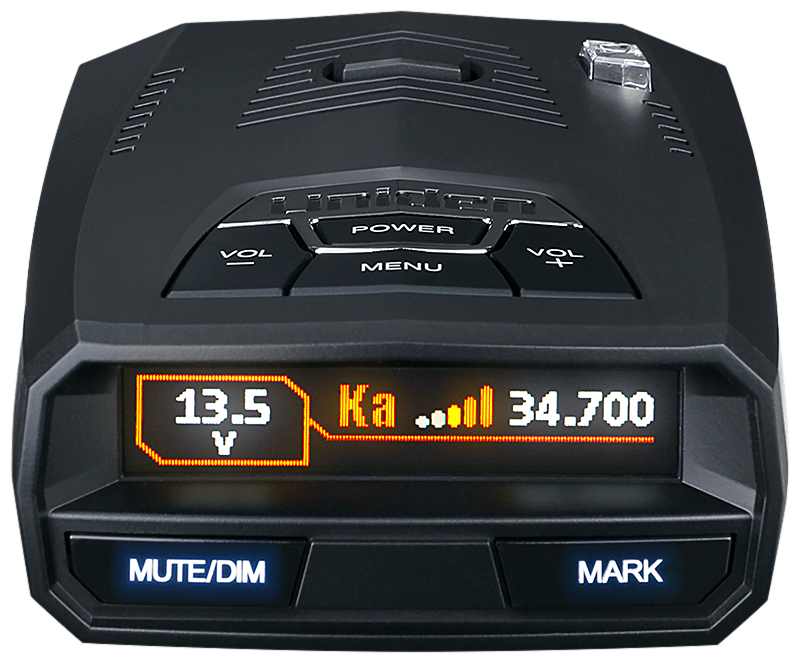
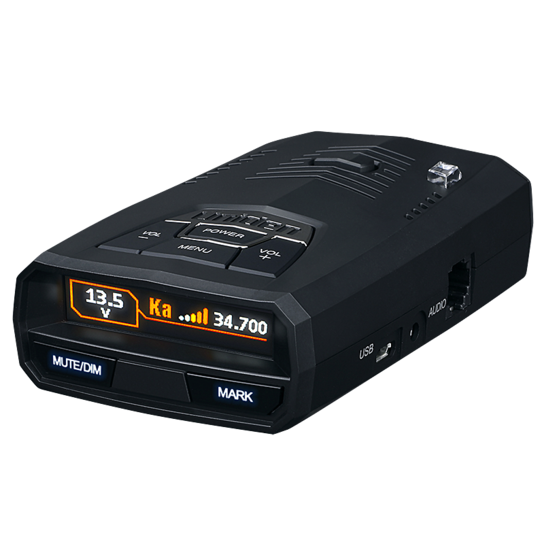
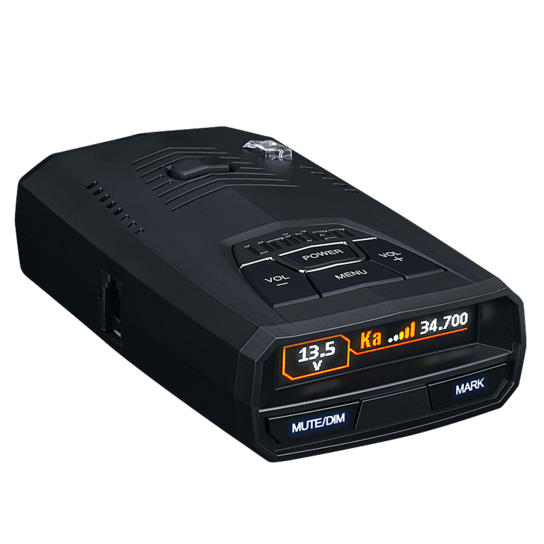
Our Uniden R4w review demonstrated this newest Uniden model has higher performance than the Uniden R3 and performance equal to the non-WIFI integrated Uniden R4.Having more than 14-times the capture distance of a police radar gun, the Uniden R4w provides performance often exceeding all other manufacturers' top performing detectors at considerably less money and is currently the most sensitive single antenna detector we've ever tested!
The result is that the Uniden R4w will provide you with more than ample warning of instant on K and Ka band miles away.
If you are looking for directional arrows, consider the Uniden R8 or the WIFI-enabled Uniden R8w.
Features
- The Uniden R4w is the highest performing single antenna radar detector
- Provides advanced digital signal processing (DSP)
- Dual LNA design for extreme performance
- Blackfin DSP processing
- MRCD/Gatso detection
- Extreme sensitivity
- GPS with red light and speed camera alerts
- Free GPS database updates downloadable from Uniden
- Quiet Ride - User set speed auto mute
- Updatable via USB connection to PC
- Uniden offers the brightest and most readable full color OLED display available
- Multi-function display includes voltage, compass, altimeter, time of day
- K false filter
- KA false filter
- Ka Narrow/Wide
- Nearly SPECTRE undetectable
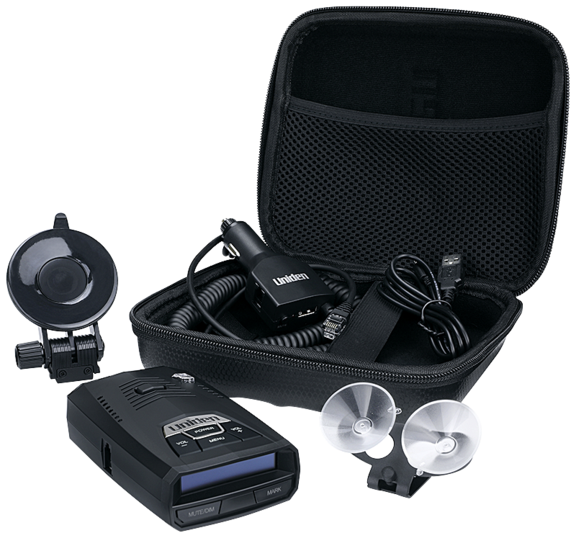
- Unique to Uniden, two different suction cup style mounting brackets included
- Cigarette adapter with MUTE KEY and USB JACK
- Carrying case
Filtering
One of the main benefits of the Uniden R4w is that it now incorporates an LNA for Ka-band as well as an LNA for X-band and K-band for about a 3dB increase in sensitivity over the Uniden R3.Easy Advanced Programming Video Tutorial
Programming your Uniden R4w for the conditions you drive is easy. Just press the menu button and you can select from various different options that include the sensitivity, the filtering, the brightness of the display and more. A detailed review of the Uniden R4 can be found here.
Included Accessories
Your Uniden R4w comes shipped to your door with everything you need including two windshield mounts--unique to Uniden-- a 12-volt accessory power cable with USB data cable, carrying case, and a Uniden R4w instruction manual.
Uniden R4w optional accessories include a hardwire kit for those interested in eliminating the use of the Uniden R4w's cigarette power adapter.
Uniden R4 Downloadable Files
Have any questions concerning your Uniden purchase?
Please email our support team 24/7 and we will promptly get back to you or call us during normal business hours to speak directly to one our countermeasure experts.
Why Buy from RadarBusters?
Expertise: RadarBusters is one of the longest operating and most experienced countermeasure-dedicated companies in the industry. We are not a big box electronics store that offers everything under the sun. You will find no other company that offers the same level of pre- and post-sales expertise, than us.
Authorized Uniden Dealer: RadarBusters is an authorized dealer for Uniden so you can be assured that your Uniden R4w detector is covered under Uniden's full warranty.
Real Reviews: Unlike the other review websites out there, RadarBusters was founded by Radar Roy, a retired cop and certified traffic radar instructor with over 40 years of experience. Luxury Automotive was so impressed with our high standards and qualifications that they dubbed us the “General Schwarzkopf of radar detectors”.
No Sales Tax: You will not be charged sales tax as long as your order is shipped outside of Arizona.
We Have Answers: Have a question or concern? Please call or email us and we will be happy to assist you. If you think you are having an issue with your product in most cases we should be able to help you resolve it over the phone.
Q: What are the different radar detector bands?
A:
- X-Band 10.525 GHz +/- 25 MHz
- An older band, mostly used by automatic doors in supermarkets and rarely used by law enforcement anymore. You can eliminate this band by turning off X band in the menu.
- K-Band 24.150 GHz +/- 100 MHz
- A potential radar strike that could also be a non-radar law enforcement. Know the area as many police still utilize this band.
- Ka-Band 34.700 GHz +/- 1300 MHz
- Alert! It’s the police. One of the most common used bands by law enforcement today.
- Laser 904nm, 33 MHz bandwidth
- Alert! It’s the police. Higher law enforcement such as state troopers often use laser.
Q: Is the Uniden R4w radar detector allowed in my state?
A: Radar detectors are currently banned in some states in the U.S. Enclosed is a list and link to American Auto Association AAA, which keeps an ongoing list of permitted states.
ALABAMA — Radar detectors are permitted for passenger vehicles but prohibited for use by commercial vehicles.
ALASKA — Radar detectors are permitted for passenger vehicles but prohibited for use by commercial vehicles.
ARIZONA — Radar detectors are permitted for passenger vehicles but prohibited for use by commercial vehicles.
ARKANSAS — Radar detectors are permitted for passenger vehicles but prohibited for use by commercial vehicles.
CALIFORNIA — Radar detectors are permitted for passenger vehicles but prohibited for use by commercial vehicles.
COLORADO — Radar detectors are permitted for passenger vehicles but prohibited for use by commercial vehicles.
CONNECTICUT — Radar detectors are permitted for passenger vehicles but prohibited for use by commercial vehicles.
DELAWARE — Radar detectors are permitted for passenger vehicles but prohibited for use by commercial vehicles.
DISTRICT OF COLUMBIA — Radar detectors are not permitted.
FLORIDA — Radar detectors are permitted for passenger vehicles but prohibited for use by commercial vehicles.
GEORGIA — Radar detectors are permitted for passenger vehicles but prohibited for use by commercial vehicles.
HAWAII — Radar detectors are permitted for passenger vehicles but prohibited for use by commercial vehicles.
IDAHO — Radar detectors are permitted for passenger vehicles but prohibited for use by commercial vehicles.
ILLINOIS — Radar detectors are permitted for passenger vehicles but prohibited for use by commercial vehicles.
INDIANA — Radar detectors are permitted for passenger vehicles but prohibited for use by commercial vehicles.
IOWA — Radar detectors are permitted for passenger vehicles but prohibited for use by commercial vehicles.
KANSAS — Radar detectors are permitted for passenger vehicles but prohibited for use by commercial vehicles.
KENTUCKY — Radar detectors are permitted for passenger vehicles but prohibited for use by commercial vehicles.
LOUISIANA — Radar detectors are permitted for passenger vehicles but prohibited for use by commercial vehicles.
MAINE — Radar detectors are permitted for passenger vehicles but prohibited for use by commercial vehicles.
MARYLAND — Radar detectors are permitted for passenger vehicles but prohibited for use by commercial vehicles.
MASSACHUSETTS — Radar detectors are permitted for passenger vehicles but prohibited for use by commercial vehicles.
MICHIGAN — Radar detectors are permitted for passenger vehicles but prohibited for use by commercial vehicles.
MINNESOTA — Radar detectors are permitted for passenger vehicles but prohibited for use by commercial vehicles.
MISSISSIPPI — Radar detectors are permitted for passenger vehicles but prohibited for use by commercial vehicles.
MISSOURI — Radar detectors are permitted for passenger vehicles but prohibited for use by commercial vehicles.
MONTANA — Radar detectors are permitted for passenger vehicles but prohibited for use by commercial vehicles.
NEBRASKA — Radar detectors are permitted for passenger vehicles but prohibited for use by commercial vehicles.
NEVADA — Detectors are permitted for passenger vehicles but prohibited for use by commercial vehicles.
NEW HAMPSHIRE — Radar detectors are permitted for passenger vehicles but prohibited for use by commercial vehicles.
NEW JERSEY — Radar detectors are permitted for passenger vehicles but prohibited for use by commercial vehicles.
NEW MEXICO — Radar detectors are permitted for passenger vehicles but prohibited for use by commercial vehicles.
NEW YORK — Radar detectors are permitted for passenger vehicles but prohibited for use by commercial vehicles.
NORTH CAROLINA — Radar detectors are permitted for passenger vehicles but prohibited for use by commercial vehicles.
NORTH DAKOTA — Radar detectors are permitted for passenger vehicles but prohibited for use by commercial vehicles.
OHIO — Radar detectors are permitted for passenger vehicles but prohibited for use by commercial vehicles.
OKLAHOMA — Radar detectors are permitted for passenger vehicles but prohibited for use by commercial vehicles.
OREGON — Radar detectors are permitted but are prohibited for use by commercial vehicles.
PENNSYLVANIA — Detectors are permitted for passenger vehicles, but prohibited for commercial vehicles.
RHODE ISLAND — Radar detectors are permitted for passenger vehicles but prohibited for use by commercial vehicles.
SOUTH CAROLINA — Radar detectors are permitted for passenger vehicles but prohibited for use by commercial vehicles.
SOUTH DAKOTA — Detectors are permitted for passenger vehicles but prohibited for use by commercial vehicles.
TENNESSEE — Detectors are permitted for passenger vehicles but prohibited for use by commercial vehicles.
TEXAS — Radar detectors are permitted for passenger vehicles but prohibited for use by commercial vehicles.
UTAH — Radar detectors are permitted for passenger vehicles but prohibited for use by commercial vehicles.
VERMONT — Radar detectors are permitted for passenger vehicles but prohibited for use by commercial vehicles.
VIRGINIA — Detectors are not permitted.
WASHINGTON — Radar detectors are permitted for passenger vehicles but prohibited for use by commercial vehicles.
WEST VIRGINIA — Radar detectors are permitted for passenger vehicles but prohibited for use by commercial vehicles.
WISCONSIN — detectors are permitted for passenger vehicles but prohibited for use by commercial vehicles.
WYOMING — Radar detectors are permitted for passenger vehicles but prohibited for use by commercial vehicles.
PUERTO RICO — Radar detectors are permitted for passenger vehicles but prohibited for use by commercial vehicles.
Q: What is the difference between HIGHWAY and CITY mode?
A: Radar detectors operate with various sensitivity levels. These levels determine the types of signals and signal ranges (bands) detected. Highway mode is the most sensitive level while City mode is the least sensitive. If the X band is left on in City mode, a radar detector can pick up many X band signals (such as garage door openers) that generate false alerts.
TEST
Q: What are the different bands?
A:
- X-Band 10.525 GHz +/- 25 MHz
- An older band, mostly used by automatic doors in supermarkets and rarely used by law enforcement anymore. You can eliminate this band by turning off X band in the menu.
- K-Band 24.150 GHz +/- 100 MHz
- A potential strike that could also be a non-law enforcement. Know the area as many police still utilize this band.
- Ka-Band 34.700 GHz +/- 1300 MHz
- Alert! It’s the police. One of the most common used bands by law enforcement today.
- Laser 904nm, 33 MHz bandwidth
- Alert! It’s the police. Higher law enforcement such as state troopers often use laser.
Q: What is the difference between HIGHWAY and CITY mode?
A: Detectors operate with various sensitivity levels. These levels determine the types of signals and signal ranges (bands) detected. Highway mode is the most sensitive level while City mode is the least sensitive. If the X band is left on in City mode, a detector can pick up many X band signals (such as garage door openers) that generate false alerts. The Uniden unit turns off the X band for City mode. When you are on the highway, there is less chance of picking up X band false alerts, so this Uniden unit keeps the X band on.
Q: My Uniden R4w detector is alerting K band when no law enforcement is around.
A: One thing detectors are competing against for newer cars are the safety sensors. Cars that emit collision avoidance, lane monitoring, stop monitoring and similar features can set off the K band. To solve this issue, you can set the K band filter to ON, but this will lessen the capability to notify you to true K band alerts.
| Receiver Type | Antenna Type | ||
| Radar |
Double Conversion Super-Hetrodyne Self Contained Antenna with dual LNAs. |
Radar | Linear Polarized E-vector Vertical |
| Laser | Pulsed Laser Signal Receiver |
Laser Front Back |
Convex Condenser Lens Concave Condenser Lens |
| Radar Detected | |||
| X-band | 10.525 GHz | Dimensions | 110.00 mm (D) x 69.00 mm (W) x 29.50 mm (H) |
| K-band | 24.150 GHz | Weight | 4.9 oz (140 g) |
| Ka | 33.400 - 35.700 GHz | Operating Temp. | -4° to +158° F (Radar/Laser) -20° to +85° C (Radar/Laser) |
| MRCT/MRCD | FMCW K-band | Storage Temp. | -22° to +203° F (Radar/Laser) -30° to +95° C (Radar/Laser) |
| Police Laser | 800nm-1,100nm (905nm nominal) | USB Interface | USB Specification 2.0/1.1 |